
The outlook for a potential Federal Reserve rate cut in 2025 has become the central focus of investors, policymakers, and businesses worldwide. After years of aggressive interest rate hikes aimed at combating inflation, signs are emerging that the US economy is entering a period of moderation. Inflation has cooled from its peaks, consumer spending is stabilizing, and job growth, while still positive, is showing signs of slowing. Against this backdrop, speculation is mounting that the Federal Reserve will pivot toward rate cuts to stimulate growth and avoid a prolonged economic slowdown. Markets are highly sensitive to these expectations. Stock indexes have rallied on hints of a dovish turn from the Fed, while bond yields have adjusted in anticipation of lower rates. Globally, the impact of US monetary policy cannot be overstated. A Fed rate cut influences capital flows, currency valuations, and borrowing costs in nearly every economy. Emerging markets, in particular, stand to benefit from reduced pressure on their currencies and improved access to foreign capital. For businesses and households, lower interest rates would mean cheaper loans, improved investment conditions, and a boost to consumer confidence. Yet uncertainties remain. If the Fed cuts too soon, it risks reigniting inflationary pressures. If it waits too long, the economy could tip into recession. The delicate balance facing central bankers in 2025 illustrates the complexity of managing modern economies in a globally interconnected financial system.
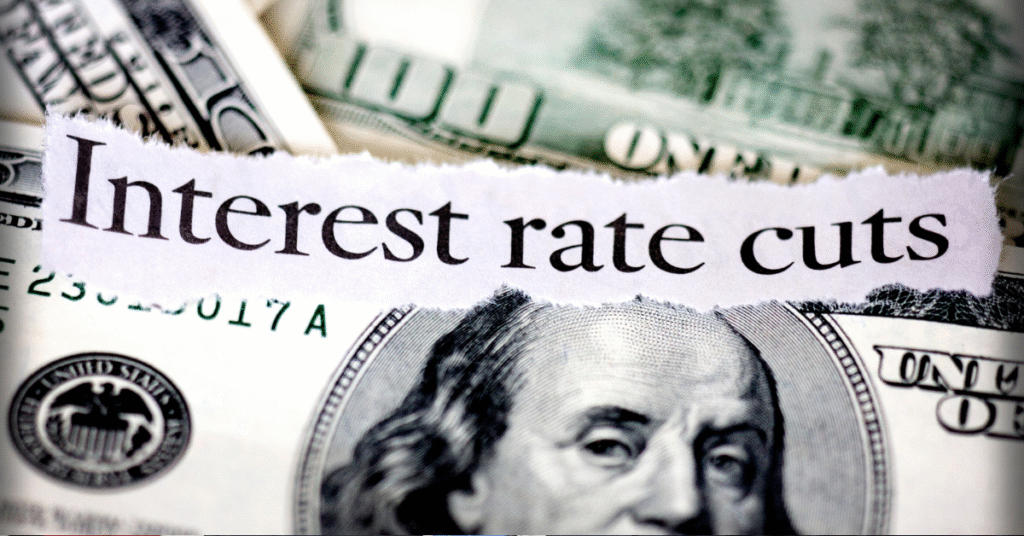
The possibility of a Fed rate cut in 2025 must also be understood in the context of broader global economic conditions. Major economies, including the European Union, Japan, and China, are experiencing their own challenges. Europe continues to face sluggish growth and high energy costs, while Japan grapples with demographic pressures and deflationary risks. China, once the engine of global expansion, is contending with slowing growth and property sector instability. These dynamics mean that global demand is uneven, and the Fed’s decisions ripple far beyond US borders. For multinational corporations, interest rate policy shapes everything from supply chain financing to currency hedging strategies. A Fed rate cut could ease international trade tensions by making US goods more affordable abroad, while also stabilizing fragile debt markets in developing nations. However, financial analysts caution that expectations of rate cuts can sometimes overshoot reality. The Fed has consistently emphasized its commitment to data-driven decision making, warning against premature assumptions. Officials stress that inflation, while lower, is not yet fully under control, and labor markets remain tighter than historical averages. These conditions suggest that while rate cuts are likely, they may be gradual and carefully calibrated rather than aggressive. Businesses, therefore, must prepare for multiple scenarios, balancing optimism with risk management. Investors are advised to diversify portfolios, focus on quality assets, and remain vigilant about global shifts that could alter Fed policy direction unexpectedly.
Looking ahead, the Fed rate cut outlook for 2025 is shaping not only short term market dynamics but also long term strategies for businesses, governments, and individuals. For companies, access to cheaper credit could accelerate investment in technology, infrastructure, and expansion projects. Small businesses, often the backbone of employment, may benefit from more affordable loans, fueling job creation and local growth. For households, lower mortgage and credit card rates could ease financial pressures, encouraging higher spending and improving consumer sentiment. On a global scale, a more accommodative Fed policy could support economic stability, particularly in regions vulnerable to debt crises and capital flight. At the same time, policymakers must remain cautious. Structural challenges such as aging populations, climate related risks, and geopolitical tensions continue to shape the global economy, meaning that rate cuts alone cannot guarantee sustained growth. They are a tool, not a cure. Central banks worldwide will likely coordinate to some degree, aligning policies to avoid sharp imbalances that could destabilize currency or trade flows. For individuals, the potential shift offers both opportunities and risks. Savers may see lower returns on deposits, but investors in equities and real estate could benefit from renewed growth momentum. Ultimately, the Fed’s choices in 2025 will influence not just Wall Street but also Main Street, shaping economic conditions for millions of people worldwide. Whether this year becomes remembered as the start of a new cycle of expansion or a missed opportunity for balanced growth depends on the precision and prudence of central bank policy
-Advertisement-